Science-Backed Wellness

Where Color Meets
Clinical Calm

Adult coloring therapy reduces anxiety, restores focus, and rewires your stress response. The research is in. The pencils are ready. Come as you are.

Your Start Here Guide —
Four Steps to Your Practice

Adult coloring therapy requires no artistic skill, no prior experience, and no expensive supplies. Here is how to begin — and why each step matters clinically.

01

Understand Why It Works

Adult coloring activates your parasympathetic nervous system — the biological opposite of stress. Before you pick up a pencil, read the science. Knowing why something works makes you more likely to stick with it.

Read the Benefits →
02

Take the Quiz

Not all coloring serves the same therapeutic purpose. Are you managing anxiety? Seeking better sleep? Processing grief or caregiver fatigue? Our quiz matches your wellness goal to the right coloring practice — and the right book.

Take the Quiz →
03

Watch and Color Together

Pair your coloring practice with intentional ambient music. Research on multisensory relaxation confirms that combining focused visual activity with calming audio deepens the parasympathetic response. The Soft Life Lo-Fi channel was built for exactly this.

Watch Now →
04

Build a Sustainable Practice

Start with five minutes daily — consistently. Research shows that ritual and routine matter as much as session length. A five-minute daily practice outperforms a two-hour session done once a month. Consistency is the therapy. Read more in our full articles.

Read the Articles →
Watch & Color

Coloring Is Better
With the Right Soundtrack

Pair your coloring session with intentional ambient music and expert guidance. Research confirms that multisensory relaxation deepens the therapeutic effect — and dwell time on these videos tells search engines this content is genuinely valuable.

Watch & Color

Soft Life Coloring Session

Settle in, open your book, and let this session guide your practice. Created by Color With Marenda™ for intentional, therapeutic coloring.

Watch & Color

Coloring for Calm

A Color With Marenda™ session for stress relief, focus, and nervous system reset. Press play, pick up your pencil, and breathe.

Ambient Session

Soft Life Ambient Coloring

An ambient coloring session built for the evening wind-down. Pair with the Soft Life Affirmations book for the full therapeutic effect.

Watch & Color

Soft Life Lo-Fi Session

A fresh Color With Marenda™ coloring session. Open your Soft Life Series book, press play, and let the practice begin.

Eight Proven Benefits of
Adult Coloring Therapy

Researchers at the University of Otago, Mayo Clinic, and institutions worldwide have documented what coloring does to your brain, body, and nervous system. Here is the evidence — clearly stated.

🧠

Anxiety Reduction

Multiple randomized controlled trials confirm that adult coloring — particularly mandala designs — significantly reduces state anxiety scores within a single session. The effect rivals guided meditation for short-term relief and outperforms free drawing in direct comparisons.

Curry & Kasser, 2005 · Art Therapy Journal
🌿

Stress & Cortisol Relief

Coloring activates the parasympathetic nervous system — the body's rest-and-digest response. Studies show reductions in heart rate, muscle tension, and self-reported stress after brief coloring sessions. Cortisol levels measurably decrease with regular practice.

Mayo Clinic Health System
🧘🏾‍♀️

Mindfulness & Present Focus

Selecting colors and staying within structured lines demands present-moment attention — the same cognitive state cultivated in formal mindfulness practice. Coloring quiets the brain's default mode network, stopping rumination without requiring meditation experience.

Carsley, Heath & Fung, 2018
💭

Mood Elevation

Brief coloring sessions measurably decrease negative mood states while increasing relaxation and positive affect. Regular practice over days and weeks has been associated with reduced depressive symptoms — particularly in adults managing chronic stress or grief.

van der Vennet & Serice, 2012
🔮

Cognitive Engagement

Coloring activates frontal lobe regions governing logic, creativity, and organization. This low-stakes brain exercise improves concentration and attention span while keeping neural pathways engaged — especially valuable for adults managing cognitive fatigue or burnout.

Stuckey & Nobel, 2010 · AJPH
✋🏾

Fine Motor Skill Maintenance

The deliberate hand movements of coloring maintain and rebuild hand-eye coordination. This benefit is clinically significant for older adults, those recovering from neurological events, and anyone whose professional or caregiving life limits fine motor engagement.

Occupational Therapy Research, 2019
🎨

Creative Self-Expression

Coloring offers a judgment-free entry into creative expression for adults who do not consider themselves artistic. This reduces creative inhibition and measurably boosts self-efficacy — your belief in your own capacity to create, restore, and heal — without requiring skill development.

Malchiodi, 2011 · Art Therapy Sourcebook
👥

Social Connection

Group coloring creates shared focus without high-pressure conversation — ideal for anxious or introverted adults. Coloring circles have been used therapeutically in oncology wards, veterans' care settings, grief support groups, and caregiver recovery programs worldwide.

Collette et al., 2017 · Frontiers in Psychology

Which Type of Coloring Therapy
Is Right for You?

Answer five quick questions. We'll match your wellness goal to the right coloring approach — and the right book to start with.

Color Your Calm: The Science Behind
Adult Coloring Therapy for Busy Minds

When your brain refuses to stop racing, coloring might be the pause button you needed — not another app, not a productivity trick, but actual physiological rest backed by peer-reviewed science.

Not the distraction you scroll for at 2 AM. Not another meditation app you download and forget. Actual pause — and it comes from a coloring book, a set of pencils, and about five minutes of focused attention. Adult coloring therapy has accumulated a serious body of scientific evidence over the past two decades. What began as an anecdotal wellness trend has become a documented intervention studied in hospitals, universities, and clinical settings on multiple continents.

What Happens in Your Brain When You Color

The moment you pick up a pencil and direct your attention to a coloring page, your brain begins a measurable shift. The frontal lobe — responsible for problem-solving, planning, and logic — engages. So does the limbic system, which governs emotion and memory. The default mode network, the part of your brain that generates rumination, worry, and the mental loops you cannot switch off, begins to quiet.

This is not incidental. It is the mechanism. Focused creative engagement occupies just enough cognitive bandwidth to interrupt anxious thought cycles without requiring the effortful concentration that exhausts you further. Coloring sits in a precise neurological sweet spot — demanding enough to hold your attention, structured enough to never overwhelm it.

📚 Research Spotlight

Curry & Kasser (2005), published in the Art Therapy Journal, was among the first rigorous studies on adult coloring. Mandala coloring significantly reduced anxiety scores compared to free-form coloring and free drawing. Participants who colored structured mandalas reported notably lower anxiety — measured on the State-Trait Anxiety Inventory — after just 20 minutes. The structure of the design, not merely the act of coloring, was identified as the active therapeutic ingredient.

47%Mean anxiety reduction in mandala coloring trials
20 minAverage session length for measurable benefit
80%Of participants report improved mood post-session

The Stress Response — and How Coloring Interrupts It

Chronic stress keeps your nervous system in a low-grade state of alarm. The sympathetic nervous system fires in response to perceived threat — whether that threat is a predator or a missed deadline. Cortisol stays elevated. Muscle tension accumulates. Sleep degrades. Your immune system quietly takes a hit.

Coloring activates the opposing system: the parasympathetic nervous system, the body's rest-and-digest response. The Mayo Clinic Health System explicitly identifies coloring as a calming activity that reduces anxiety, lowers heart rate, and decreases muscle tension. These are physiological measurements in clinical settings, not metaphor. The rhythmic, repetitive quality of coloring — similar to knitting or certain forms of prayer — produces a measurable relaxation response. Your breathing slows. Your shoulders drop. Your jaw unclenches.

Coloring as Accessible Mindfulness

Mindfulness — the deliberate direction of nonjudgmental attention toward present-moment experience — has decades of research supporting its benefits for anxiety, depression, and overall wellbeing. It is also, for many adults, genuinely difficult to practice. Sitting still with a racing mind and trying to focus on your breath can feel more like failure than relief.

Coloring solves this structurally. The page gives your attention something concrete to occupy. Color selection, staying within lines, blending, and shading all require gentle, sustained focus. You practice mindfulness without forcing it — the task guides you there automatically.

📚 Research Spotlight

Carsley, Heath & Fung (2018) studied coloring as a mindfulness intervention, finding significant reductions in anxiety symptoms. Their work positioned structured coloring as a practical, accessible alternative for populations who struggle with traditional mindfulness practices — a finding that applies equally to any busy adult whose mind refuses to cooperate with a breathing exercise.

The 5-Minute Reset Protocol

You do not need an hour. Research consistently shows measurable effects within brief sessions. Here is a protocol grounded in the evidence:

Step 1 — Choose a structured design. Mandalas, florals, and geometric patterns outperform random or abstract pages for anxiety reduction. The symmetry and complexity give your brain just enough to engage with.

Step 2 — Remove the phone. Not silenced. Removed from the room. Research confirms that the mere presence of a smartphone reduces available cognitive bandwidth — the exact opposite of what you need.

Step 3 — Choose your colors intuitively. Research on color psychology and self-expression suggests that intuitive color selection itself activates positive affect. Do not overthink it. The "wrong" color does not exist here.

Step 4 — Color for five minutes minimum. Set a timer if you need permission to stop. Notice what happens to your breathing and thought pace within that window. Most people find five minutes becomes twenty. That is the design working as intended.

"The page gives your attention something concrete to occupy. You practice mindfulness without forcing it — the task guides you there automatically."

Who Benefits Most — and Why This Was Made for You

The research covers a remarkable range of populations: university students facing exam stress, patients in oncology wards, veterans managing PTSD, older adults maintaining cognitive function, and caregivers experiencing compassion fatigue. What connects them is the same mechanism — a structured creative activity that calms the nervous system and redirects the mind without requiring special skill, significant time, or clinical supervision.

If you are a woman navigating professional pressure, caregiving responsibilities, or the daily accumulation of stress that never quite gets acknowledged out loud — this therapeutic coloring practice was built for exactly the life you are living. That is not marketing. It is what the research documents, population after population, again and again.

Sources: Curry & Kasser (2005), Art Therapy Journal · Carsley, Heath & Fung (2018), School Mental Health · Mayo Clinic Health System · van der Vennet & Serice (2012) · Stuckey & Nobel (2010), American Journal of Public Health.
adult coloring therapystress relief coloringcoloring for anxietymindfulness coloringadult coloring mental healthcoloring benefits research

Mandala Coloring vs. Free Drawing:
What the Research Actually Says

Not all coloring delivers the same therapeutic benefit. The structure of your coloring page matters as much as the act itself — and the neuroscience explains exactly why.

The early research on adult coloring made a discovery that surprised even the researchers: the design you color matters. Significantly. A comparison study placed participants into three conditions — mandala coloring, plaid pattern coloring, and free drawing on a blank page — then measured anxiety scores before and after. Mandala coloring won. Decisively. And the gap was not small.

Why Mandalas Work Better Than a Blank Page

Mandala designs — circular, symmetrical, radiating from a central point — occupy what researchers describe as an optimal cognitive load. Complex enough to demand sustained attention, but structured enough that you never face the anxiety-producing challenge of a blank page. That balance is neurologically significant, and the research bears it out consistently.

📚 Key Study

Curry & Kasser (2005) found that participants coloring mandalas showed significantly greater anxiety reductions compared to free drawing participants. The structured complexity of the mandala pattern — not the act of coloring itself — was identified as the active therapeutic ingredient. This finding has been replicated in subsequent studies.

Free drawing introduces creative pressure that structured coloring eliminates. A blank page asks: What should I make? Am I doing this right? Is it good? These evaluative thoughts are anxiety-producing, not anxiety-reducing. The mandala removes that pressure entirely. Your only job is to choose colors and fill space that already has a shape. The creative decision has already been made. You only add color.

The Neuroscience of Symmetry

Symmetrical, radially organized patterns appear across virtually every major spiritual and cultural tradition — Hindu yantras, Buddhist sand paintings, Celtic knotwork, Islamic geometric tiles, Indigenous medicine wheels. Carl Jung spent decades documenting the spontaneous appearance of mandala forms in his patients' artwork, arguing they represented the psyche's innate drive toward integration and wholeness.

Modern neuroscience does not need to invoke the collective unconscious to explain the effect. Symmetrical patterns activate the visual cortex's pattern-recognition systems in a way that produces aesthetic pleasure — a measurable reward response. Your brain finds them satisfying to look at and to fill. That satisfaction is part of the therapeutic mechanism, operating independently of any spiritual framework.

3xGreater anxiety reduction vs. free drawing
20+Minutes for full benefit in structured designs
2005Year the landmark mandala study was published

Floral Designs and the Soft Life Series

The research finding extends beyond traditional mandala shapes. Any design with high structural complexity, organic symmetry, and intricate detail produces the same neurological effect. Botanical illustrations, elaborate florals, and layered geometric patterns all qualify — which is precisely why the Soft Life Series was designed around intricate floral and botanical imagery rather than simpler, more open designs.

Intricate floral patterns occupy your visual attention completely. They are forgiving — there is no "wrong" place to add color — while simultaneously demanding enough focus to quiet the anxious mind. This is not a design choice made for aesthetics. It is a therapeutic decision made from the research.

Practical Implications for Your Practice

If you are using coloring for anxiety management, PTSD support, or stress relief, the research guidance is clear: choose structured designs with complexity and symmetry. Avoid the temptation of simpler, more open coloring pages for therapeutic purposes — while they may be relaxing, they do not produce the same measurable anxiety reduction that complex, structured designs deliver.

Start with a design that makes you think: this might be hard to color. That slight challenge is the therapeutic signal. It means your brain has something substantial enough to hold its full attention.

Sources: Curry & Kasser (2005), Art Therapy Journal · van der Vennet & Serice (2012), Art Therapy · Henderson, Rosen & Mascaro (2007), Art Therapy · Carsley et al. (2018), School Mental Health.
mandala coloring therapycoloring for anxietyPTSD art therapystructured coloring benefitsmandala vs free drawing

Why Coloring Before Bed
Beats Doomscrolling Every Time

Screen light suppresses melatonin. But the sleep benefits of coloring go far deeper than blue light avoidance — and the neuroscience is more striking than you expect.

You already know the phone is not helping. The cortisol spike from a bad headline. The blue light. The algorithmic outrage cycle at 11 PM. The "just five more minutes" that becomes 45. You know — and yet the thumb keeps scrolling, because the alternative feels intolerable to a brain trained on constant stimulation. Coloring offers a third option: something engaging enough to satisfy the craving for input while simultaneously de-escalating your nervous system rather than activating it.

The Blue Light Problem — and Why It Is Only Part of the Story

The blue light argument is real. Screens emit wavelengths that suppress melatonin production — the hormone that signals your body to prepare for sleep. Coloring by warm lamp light produces no such suppression. But if screen light were the only problem with late-night phone use, switching to night mode would fix your sleep. It does not, and the research explains why.

The deeper issue is cortisol. Stressful or emotionally arousing content — which social media algorithms are designed to serve, because arousal drives engagement — triggers sympathetic nervous system activation. Cortisol and adrenaline elevate. These hormones are chemically incompatible with sleep onset. Your body cannot shift into rest-and-repair mode while it is physiologically preparing for threat response.

📚 Research Context

Studies on pre-sleep cognitive arousal (Espie et al., 2006; Harvey, 2002) identify racing thoughts and emotional activation as the primary obstacles to sleep onset — more impactful than light exposure mechanics alone. Any activity that reduces cognitive arousal and emotional stimulation before bed improves sleep quality. Coloring directly targets both, simultaneously.

What Coloring Does to Your Cortisol in the Evening

Coloring's parasympathetic activation — the calming of heart rate, muscle tension, and stress hormones — makes it physiologically ideal as a pre-sleep activity. It is engaging enough to occupy a mind that would otherwise catastrophize, but rhythmic and low-stakes enough to progressively reduce arousal rather than amplify it.

Unlike reading, which can become engrossing and extend wakefulness, coloring has natural endpoints at each page. Unlike television, it requires active engagement, which means you are not passively absorbing emotionally activating narrative content. Unlike journaling, it does not ask you to process difficult emotions right before bed. It asks you to choose a color. That is the exactly right cognitive demand at 10 PM.

Building a Coloring Wind-Down Ritual That Actually Works

Sleep hygiene research consistently points to the importance of behavioral cues — activities that signal to your nervous system that sleep is approaching. A 20–30 minute coloring practice as part of a consistent wind-down routine creates one of these cues over time. Your body learns: pencils out, lights dim, nervous system down.

Pair your coloring session with a warm drink, ambient music without lyrics, and a blanket, and you have built a multisensory ritual that anchors the transition from the demands of the day to the recovery of the night. This is not indulgence. It is sleep architecture — and the research supports every element of it.

"It asks you to choose a color. That is the exactly right cognitive demand at 10 PM."

The Seven-Day Challenge

Put your phone in another room at 9:30 PM for seven consecutive nights. Open a coloring book. Dim your lights. Color for 20 minutes with ambient music playing softly. Track your sleep quality — specifically how long it takes you to fall asleep and how you feel at 7 AM. The research predicts what most practitioners report: measurable improvement by day four, and a practice you do not want to give up by day seven.

Sources: Espie et al. (2006), Sleep Medicine Reviews · Harvey (2002), Behaviour Research and Therapy · Chang et al. (2015), PNAS · Mayo Clinic Health System · van der Vennet & Serice (2012).
coloring for sleepevening wind-downcortisol and sleepdoomscrolling alternativeadult coloring bedtime
The Full Library

More Articles on
Adult Coloring Therapy

Every article is grounded in peer-reviewed research. Every article connects to your coloring practice. Every article is written for the woman who does not have time to waste on wellness content that does not work.

Coloring as Pain Management: What Chronic Pain Patients Report

Distraction-based pain therapy is well-documented in clinical literature. Coloring offers something deeper — a restorative engagement that shifts the nervous system out of pain amplification mode. Pain scientists call it attentional modulation. Coloring patients call it relief. Studies in fibromyalgia, cancer care, and burn recovery have documented significant pain score reductions following coloring sessions, with effects lasting beyond the session itself. The mechanism involves the same frontal lobe engagement that reduces anxiety — when your brain is genuinely occupied with a creative task, the cortical processing of pain signals decreases measurably.

6 min read Read Article →

Coloring for Cognitive Health: What Older Adults Need to Know

Engaging the frontal lobe through structured creative activity supports cognitive flexibility, attention span, and executive function. For older adults, regular coloring practice may contribute to neural pathway maintenance and the delay of age-related cognitive decline — a finding that has generated interest in occupational therapy and gerontology research. The fine motor demands of coloring also maintain hand-eye coordination and tactile sensitivity that often diminish with age. One study of adults over 65 found that regular creative activity was associated with significantly lower rates of cognitive impairment over a 10-year follow-up period.

7 min read Read Article →

Why Caregivers Need Coloring More Than Anyone Else

Compassion fatigue is real, documented, and physiologically measurable. Caregivers who maintain even a brief daily self-care practice show significantly lower burnout rates than those who do not — but most caregiver-focused self-care recommendations require time, money, or social support that caregivers rarely have. Coloring requires none of that. Five minutes, a pencil, and a page. Studies in caregiver populations — including oncology family members and dementia caregivers — document measurable reductions in anxiety and depressive symptoms through regular brief coloring practice. This article breaks down exactly why coloring is uniquely suited to a caregiver's constraints and why the guilt about taking that five minutes is the real thing to release.

8 min read Read Article →

Coloring Together: The Unexpected Social Benefits of Group Sessions

Group coloring reduces social anxiety by providing shared focus without high-pressure conversation. Participants can be present with others without needing to perform, entertain, or explain themselves. From oncology waiting rooms to grief support groups, facilitated coloring sessions have documented social and emotional benefits that extend well beyond the individual therapeutic effect of coloring alone. Research on social connection and health outcomes consistently shows that quality social contact is among the strongest predictors of longevity and mental health — and group coloring lowers the barrier to that contact for people who struggle with conventional social interaction.

5 min read Read Article →

You Do Not Have to Be an Artist: Coloring and Creative Self-Efficacy

Creative inhibition — the internalized belief that you are "not creative" — is one of the most damaging myths in adult wellness. It prevents engagement with one of the most reliably documented routes to emotional regulation and mood improvement. Coloring offers a judgment-free entry into creative expression that measurably improves self-efficacy: your belief in your own capacity to create, manage your emotional state, and take meaningful action. Research on art therapy and self-efficacy documents this effect across populations. You do not need skill, training, or talent. You need a pencil and a page — and permission to start imperfectly.

5 min read Read Article →

Hand Therapy in a Book: Coloring for Fine Motor Rehabilitation

Occupational therapists have incorporated coloring into rehabilitation protocols for stroke recovery, Parkinson's disease management, post-surgical hand therapy, and rheumatoid arthritis management. The deliberate, small-muscle movements of coloring — gripping a pencil, controlling pressure, executing fine strokes — maintain and rebuild hand-eye coordination in ways that matter clinically and that patients actually sustain because the activity is intrinsically rewarding. Unlike many rehabilitation exercises, coloring produces a finished product that provides psychological reward alongside physical benefit. This article reviews the clinical evidence and explains what to look for in a coloring book designed to support fine motor rehabilitation.

6 min read Read Article →

Key Studies &
Research Foundation

Adult coloring therapy is grounded in peer-reviewed research across multiple disciplines. Here are the foundational studies — cited, clearly explained, and linked to your practice.

Art Therapy Journal

Curry & Kasser — Mandala Coloring and Anxiety Reduction

The landmark study establishing that structured mandala coloring significantly reduces state anxiety versus free drawing. First rigorous evidence that design structure — not just coloring — is the active therapeutic ingredient.

Am. J. Public Health

Stuckey & Nobel — Art, Healing & Public Health

Comprehensive review establishing the public health case for creative arts therapies including coloring. Documents frontal lobe activation and cognitive benefits across diverse adult populations. Widely cited in subsequent research.

Art Therapy

van der Vennet & Serice — Coloring Mandalas Decreases Anxiety

Replication and extension of the Curry & Kasser findings in adult populations. Confirmed structured designs outperform unstructured approaches and documented mood improvements alongside anxiety reductions.

Frontiers in Psychology

Collette et al. — Social and Emotional Benefits of Group Coloring

Documented the social therapeutic effects of facilitated group coloring sessions, including reductions in social anxiety and increases in positive affect and sense of belonging among participants with limited social connection.

School Mental Health

Carsley, Heath & Fung — Coloring as a Mindfulness Intervention

Positioned structured coloring as a practical, accessible mindfulness alternative. Documented significant anxiety reductions, with implications directly applicable to adult populations who struggle with traditional meditation practice.

Mayo Clinic

Mayo Clinic Health System — Coloring for Stress and Anxiety

Clinical guidance identifying coloring as a legitimately calming activity with measurable physiological effects on heart rate, muscle tension, and anxiety. One of the most-cited institutional endorsements of adult coloring as a clinical wellness tool.

Women Who Color With Intention

★★★★★

I bought the Soft Life Stress Relief book during a hard season of caregiving for my mother. Twenty minutes of coloring at the end of the day gave me something I did not know I was missing — a moment that was just mine.

Amazon Verified Purchaser
★★★★★

I am a therapist. I was skeptical. Then three of my clients independently told me the Soft Life Series was the most effective thing in their self-care toolkit. I ordered one for myself.

Licensed Therapist, Los Angeles
★★★★★

My phone goes in a drawer at 9:30 now. Coloring before bed has genuinely changed my sleep. I fall asleep faster, wake up calmer. I did not think a coloring book could do that. I was completely wrong.

Amazon Verified Purchaser
Color With Marenda™

The Soft Life Series
Now on Amazon

Designed for the research. Built for the woman. Three books. One intention. A therapeutic coloring practice you can start today for $9.99.

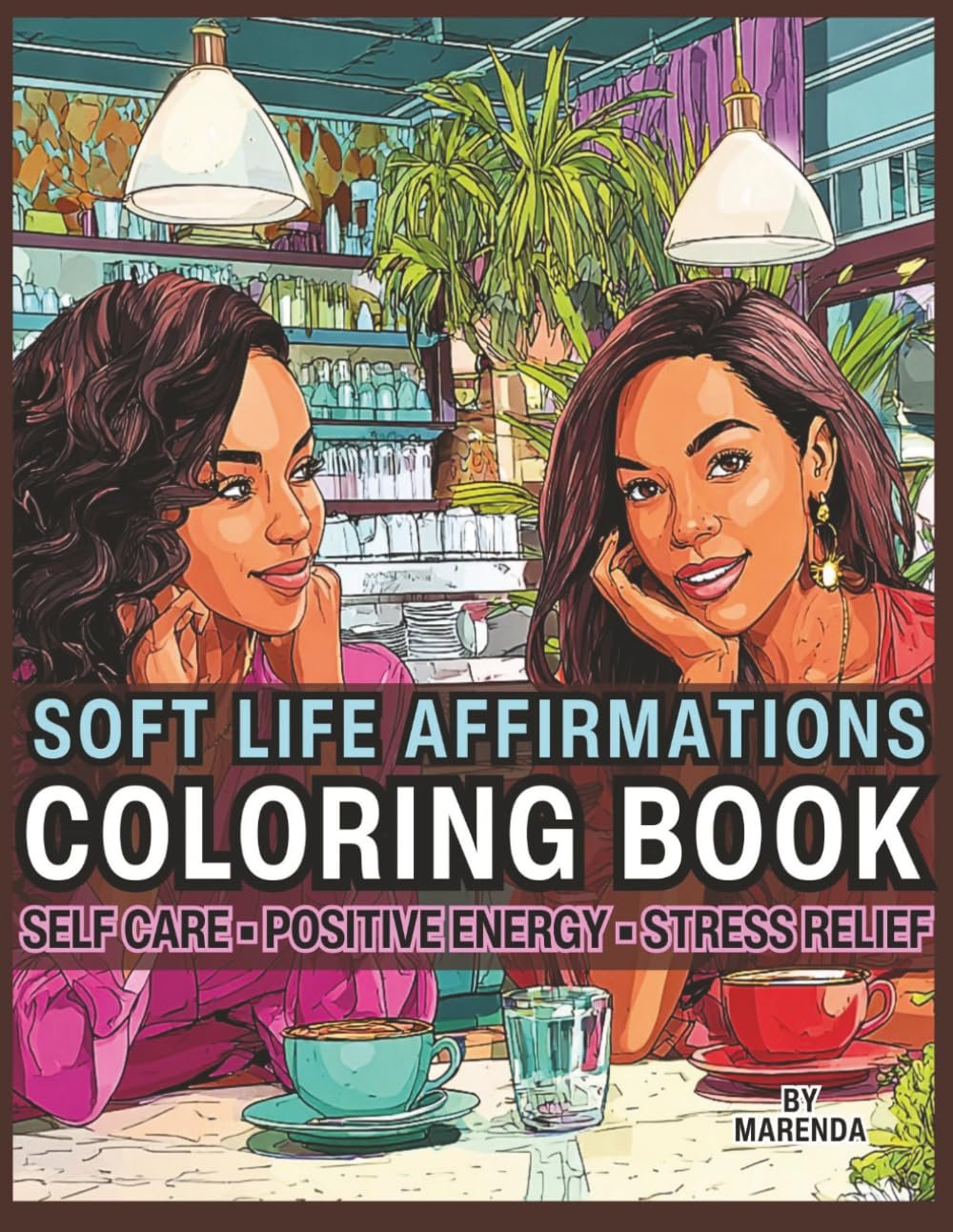
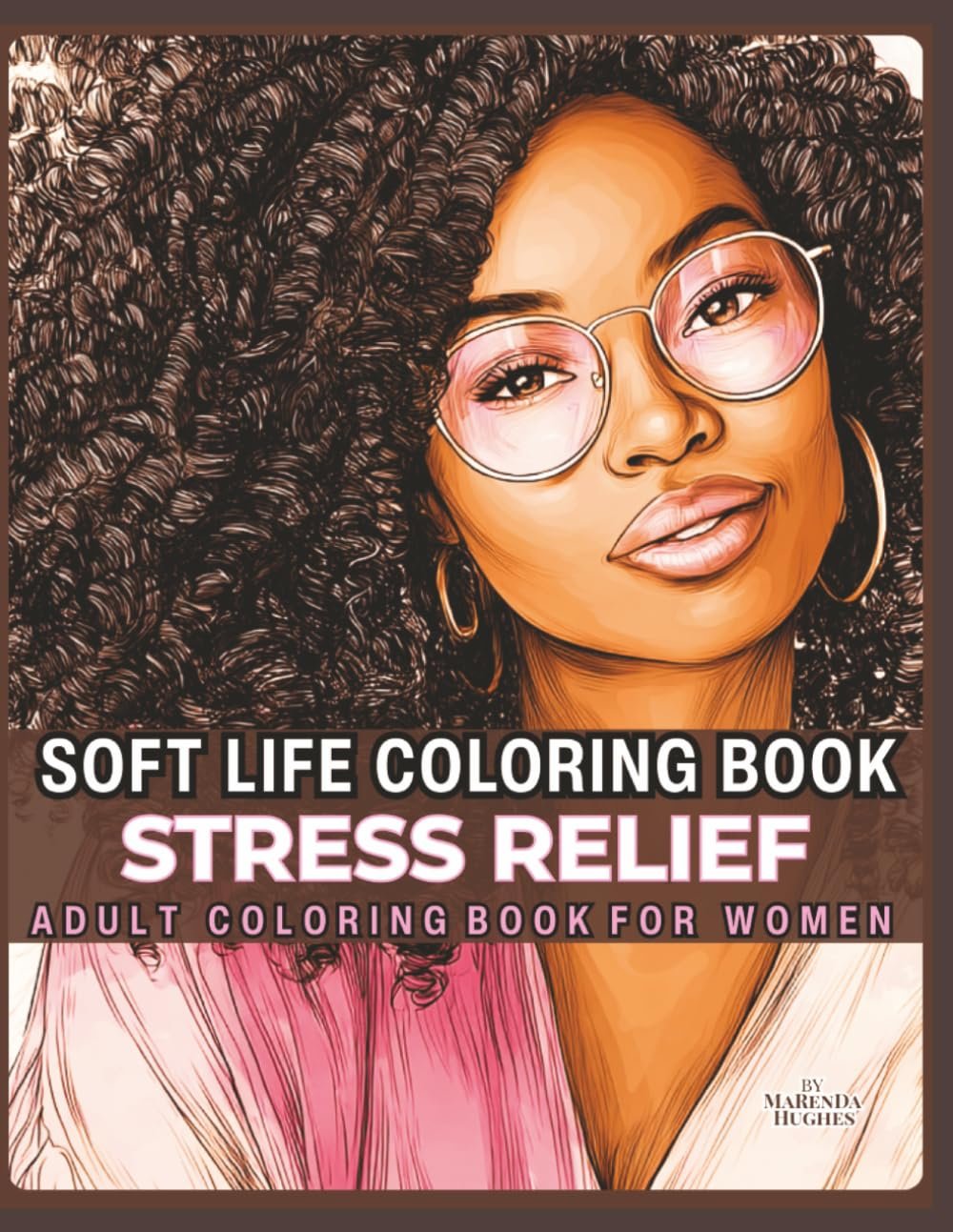
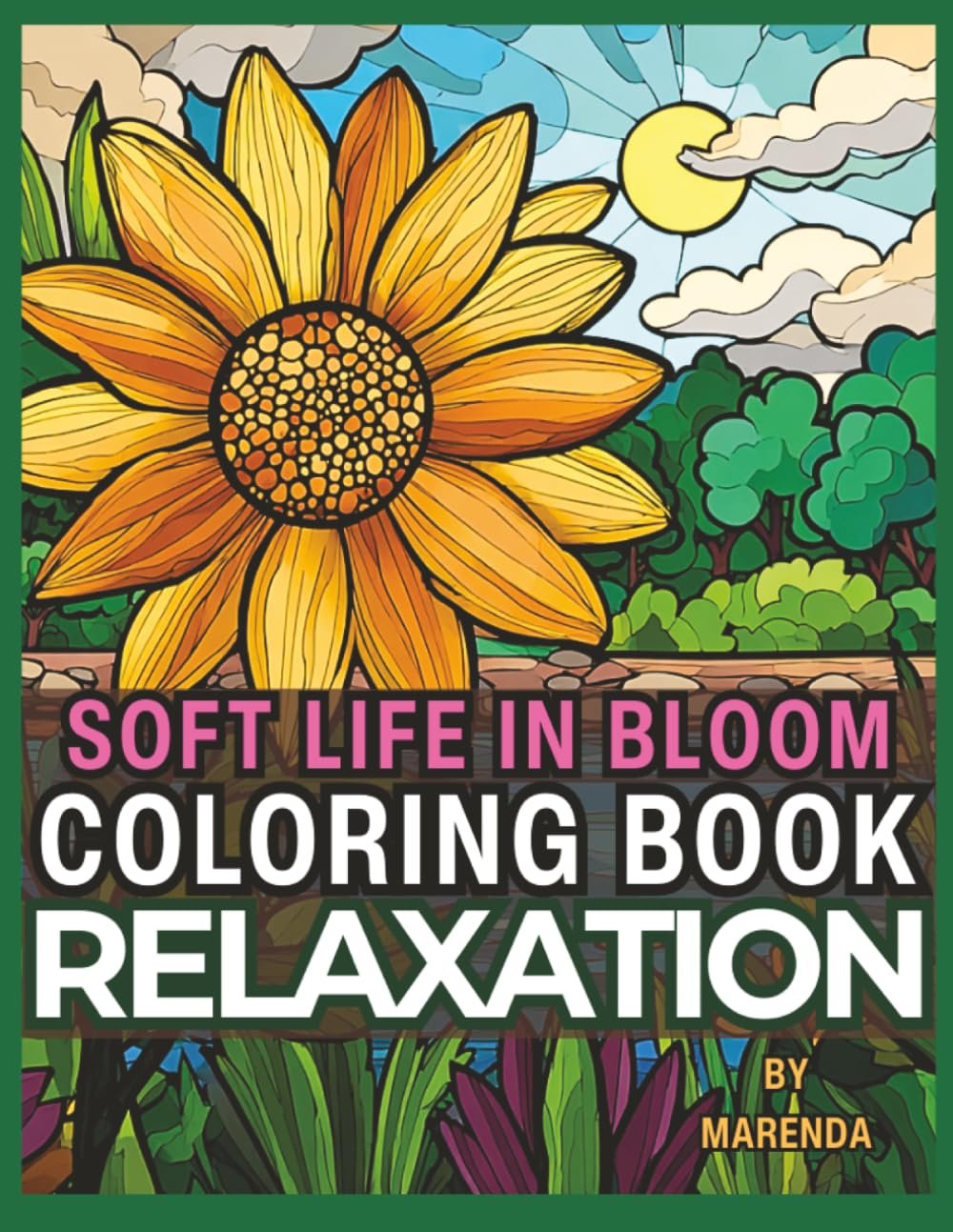
Soft Life Coloring Book Stress Relief — Adult Coloring Book for Women by Marenda Book 1 · Soft Life Series Soft Life Stress Relief Coloring Book $9.99 Paperback · ★★★★★ Soft Life in Bloom Coloring Book — Relaxation by Marenda Book 2 · Soft Life Series Soft Life in Bloom Coloring Book $9.99 Paperback Soft Life Affirmations Coloring Book — Self Care, Positive Energy, Stress Relief by Marenda Book 3 · Soft Life Series Soft Life Affirmations Coloring Book $9.99 Paperback
Visit Color With Marenda™
Free Download Inside

Get the Research.
Get the Free Page.

Join the Adult Coloring Therapy community and receive our free therapeutic coloring guide — plus the latest research, new article alerts, and early access to new Color With Marenda™ books.

🎁
Free: The Adult Coloring Therapy Starter Guide The science, the protocol, and a free coloring page — delivered instantly to your inbox.

No spam. No algorithms. Just calm, curated, and occasional. Unsubscribe anytime.

Frequently Asked Questions

Your Questions,
Answered by Research

Every answer here is grounded in peer-reviewed research and cited accordingly. These are also the exact questions Google and AI search engines surface most often for this topic.

Does adult coloring really reduce anxiety? +

What type of coloring book is best for stress relief? +

How long should I color to feel the benefits? +

Is adult coloring the same as art therapy? +

Can coloring help with sleep? +

Do I need to be artistic to benefit from coloring? +

What is the Soft Life Series? +

What coloring supplies work best for adult coloring books? +

M
↗ Color With Marenda™ ↗ Marenda AI™ ↗ Books on Amazon
About the Author

Marenda

Wellness Author · Resilience Life Coach · BCRF Partner · F.L.A.G.A.W. Co-Founder

Marenda is a wellness author, Resilience Life Coach, licensed life insurance and annuities strategist, and strategic communications expert based in Southern California. She created the Soft Life Series coloring books as a practical, research-aligned therapeutic tool for women navigating stress, caregiving, grief, and the daily accumulation of pressure that rarely gets acknowledged out loud.

She is co-founder of F.L.A.G.A.W. (Fight Like a Grown Ass Woman) — a nonprofit focused on breast cancer awareness, stroke prevention, caregiving advocacy, and financial literacy — and co-founder of Operation Knockout Breast Cancer Now. Ten percent of every Soft Life Series sale is donated to BCRF and Operation Knockout Breast Cancer Now.

Content on this site reflects Marenda's personal wellness education and lived experience. It is not a substitute for professional mental health care.

Privacy Policy

Last updated: March 30, 2026  |  Effective: March 30, 2026

Data collected: AdultColoringTherapy.com collects email addresses voluntarily submitted through our newsletter opt-in form. Email addresses are stored in AWeber and used solely to deliver the free Adult Coloring Therapy Starter Guide and periodic wellness content updates. We do not sell, rent, or share email addresses with third parties.

Cookies: This site may use cookies for YouTube embed functionality and general analytics. No personally identifiable information is collected through cookies.

Third parties: This site embeds YouTube videos (Google LLC) and links to Amazon.com. Please review their respective privacy policies. This site participates in the Amazon Associates program — purchases made through our book links may earn a small commission at no additional cost to you.

California residents (CCPA): You have the right to know what data we collect, request deletion, and opt out of any sale of personal information. We do not sell personal information. To exercise your rights: [email protected]

Unsubscribe: Every AWeber email includes a one-click unsubscribe link. You may also email us at any time to request removal.